


Finding Freedom from Rejection

“I never loved you,” my mother said. Shocked, I sank back into the brown couch, its worn cushions stiff under my weight.
It was early morning after my night shift at the donut shop. The house smelled faintly of coffee and oatmeal, mingling with the faint tang of yesterday’s dishes left to dry. My dad’s unfinished pot of oatmeal sat cooling on the stovetop, steam no longer curling lazily into the cold kitchen air.
My mother waited on the couch, hands clasped tightly, knuckles pale, shoulders hunched as if bracing against an invisible weight. Her voice trembled when she whispered, “Can we talk?” A quiver caught in the word talk, and it scraped across the quiet room like a screeching violin string.

Sunlight streamed through the sliding glass back door, slashing warm gold across the wood floor, dust motes floating in the light. Outside, black-capped chickadees flitted to the feeder, their wings fluttering with a sharp whir, and soft chirps punctuated the silence of the house.
I sat beside her, hesitant, feeling the couch sag beneath me. Then, through trembling lips, she whispered, “I never loved you,” and collapsed into tears, shoulders shaking, breath catching in ragged sobs. My chest tightened, heart pounding so loudly it felt as if it might burst through my ribs.
For a long moment I couldn’t breathe. My stomach knotted, and my hands pressed against the couch cushions until the fabric dug into my palms. I was eighteen—old enough to work through the night but not old enough to process the tidal wave of emotions those words unleashed. Yet her confession answered a question I had carried for years: Why can’t someone love me?
Why can’t I feel loved?
Stunned, I didn’t have a voice to respond. Her tears fell in hot, wet streaks across her cheeks, her shoulders shaking with each sob. She asked me to forgive her, her voice cracking, lips trembling, the raw sorrow in her tone cutting through me. Compassion flowed for this sorrowful woman, but my chest still ached with confusion and disbelief.
“Yes, Mom, I forgive you,” I whispered, though uncertainty lingered in my throat. I could only wonder how one couldn’t love their own child. My fingers flexed into tight fists on my lap, nails pressing into my palms. Unbeknownst to my mother, a tiny life grew at the time inside me. I loved this baby fiercely, and the stark contrast made it almost impossible to comprehend how she couldn’t have loved me.
I’ll never forget that day. I learned that my mother’s confession was not born of cruelty, but of illness. Postpartum depression had quietly stolen her capacity to bond, to feel, to attach. At the time, I had no language for that reality—only the ache of one who believed she was unlovable. Understanding the cause did not erase the wound.

I was an emotionally, mentally, and spiritually struggling young adult. Decades passed after that pivotal revelation, largely made up of a string of broken relationships, navigation through single motherhood, and lifelong depression. Little did I know that most of it stemmed from those early childhood rejection wounds.
Over the years I sought help from many sources: friends, family, counseling, the medical field, and God. Even though I made progress in understanding my wounds and managing my emotions, there remained a distance between YHWH and me that was difficult to explain.
YHWH’s love for me was an abstract concept, not a tangible reality. It was like watching Niagara Falls from behind a thick pane of glass. I could see the mighty waterfall cascading in relentless power, its white spray sparkling in the sunlight, but I couldn’t feel the mist wetting my skin or cooling the air around me. I could glimpse the churning river below but couldn’t hear the deafening roar or smell the sweet freshness carried by the wind. I could marvel at the beauty and know that the falls existed, but I couldn’t step into the scene, couldn’t let it soak me completely, couldn’t experience the full force of the water pounding over the edge.

And with every glance the distance pressed on me like a physical weight. I longed to break through the barrier, to feel the power and presence of YHWH’s love rushing over me, cleansing me, holding me. Instead I was left on the outside, craving contact, aching with frustration, and haunted by the knowledge that something so magnificent existed just beyond my grasp. Every attempt to “feel” it—the prayers, the study, the quiet moments of reflection—felt like reaching toward the spray that never quite touched my skin. YHWH’s love was real, overwhelming in its magnitude, but somehow I could not step fully into it. And that separation, that yearning, left me raw, desperate, and endlessly searching. Do you sometimes feel that way, too—aware of YHWH’s love but struggling to experience it fully in your life?
Rejection is lethal. Its effects seep into every part of us—body, soul, and spirit. Like the invisible damage left by an earthquake, the trauma of rejection is often immeasurable, lingering silently into adulthood. Rejection can be intentional, a purposeful withholding of love, or unintentional, as in my case, the result of a mother incapable of loving me fully. Your story may look different from mine, and rejection wounds may not be the same, but the ache it leaves can follow us for years. Whether your wound came from a parent, a partner, a friend, or a community, the scars of rejection can shape our identity in ways we may not even recognize—until YHWH begins to uncover them.
As a little girl I sat on the wooden pew in our church while the congregation sang the hymn “Isaiah 49.” There’s a line asking if a mother can forget her baby, and it always brought me to tears. In those moments my spirit connected with YHWH in ways I could not fully understand. It would be more than a decade before I learned the truth of my mother’s inability to love me during my early years.
Can a mother forget the baby at her breast and have no compassion on the child she has borne? Though she may forget, I will not forget you! (Isaiah 49:15, NIV)
The physical effects of rejection are well documented. Research dating back to the 1920s reveals that babies deprived of affection, touch, and nurture can die within two years. Dr. Montagu’s article “They Could Not Live Without Love” details this stark reality. Rejection can be an unseen killer. And the damage does not fade with age—it intensifies.
The psychological effects are equally profound. Do you feel the squeeze of anxiety or the sting of worthlessness? Psychiatrist Bessel van der Kolk explains in The Body Keeps the Score that trauma reshapes the body and brain, altering stress responses, hormonal activity, and information processing. Trauma leaves lasting imprints that ripple into adulthood.
Rejection also wounds the spirit. Proverbs 18:14 informs us that “the human spirit can endure in sickness, but a crushed spirit who can bear?” (NIV). Bible scholar Derek Prince calls rejection the deepest wound a person can endure, leading to loneliness; misery; despair; hopelessness; and even death, at times by suicide.

The need for love is universal, yet its absence reverberates in every part of our being.
This book explores ways to overcome the devastating symptoms of rejection, what Scripture reveals about YHWH’s love, and practical steps toward abiding in it. Joy, peace and love need not slip like sand through clenched hands.
No matter where you are on this journey—beginning, middle, or nearing the end—YHWH wants to pour His healing balm over your spirit, ease your pain, and lavish you with His love.
And that is why I wrote this book.
Not from a place of having it all figured out, but from years of searching, healing, and slowly learning how to move from knowing about YHWH’s love to actually experiencing it. This journey changed me—and I believe it can change you, too.
If you’ve ever felt rejected, unseen, or struggled to truly receive God’s love, this book was written with you in mind.
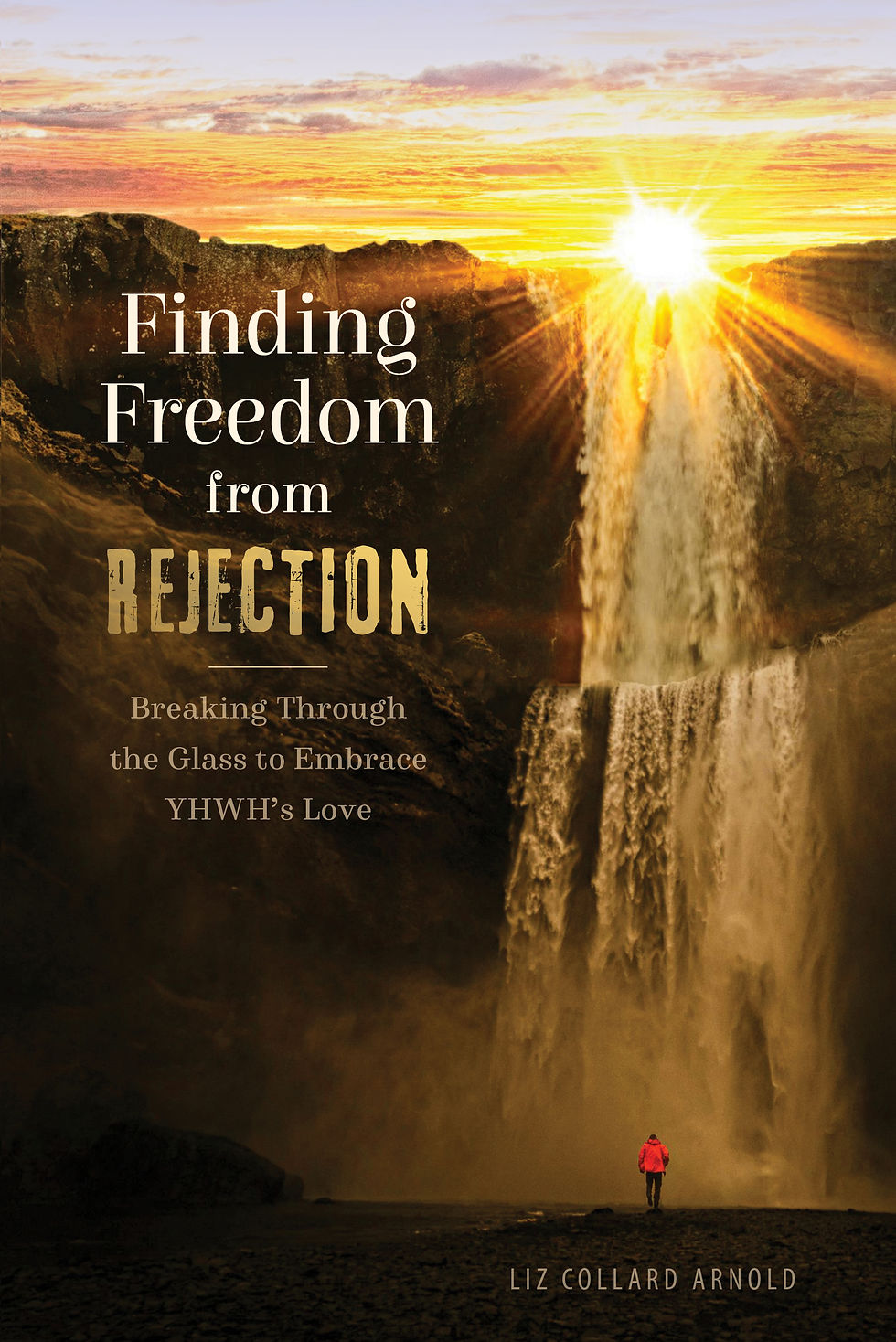
Inside, you’ll discover how rejection takes root, how it shapes your identity, and—most importantly—how Scripture reveals a way out. A way into healing, wholeness, and a deeper, more personal experience of YHWH’s love.
You don’t have to stay stuck in the patterns of your past. You don’t have to live at a distance from the love your heart longs for.
You don’t have to stay behind the glass.
If you’re ready to begin your journey toward healing and freedom, I invite you to take the next step.
Get your copy today and start stepping into the love that has been waiting for you all along.
Comments